
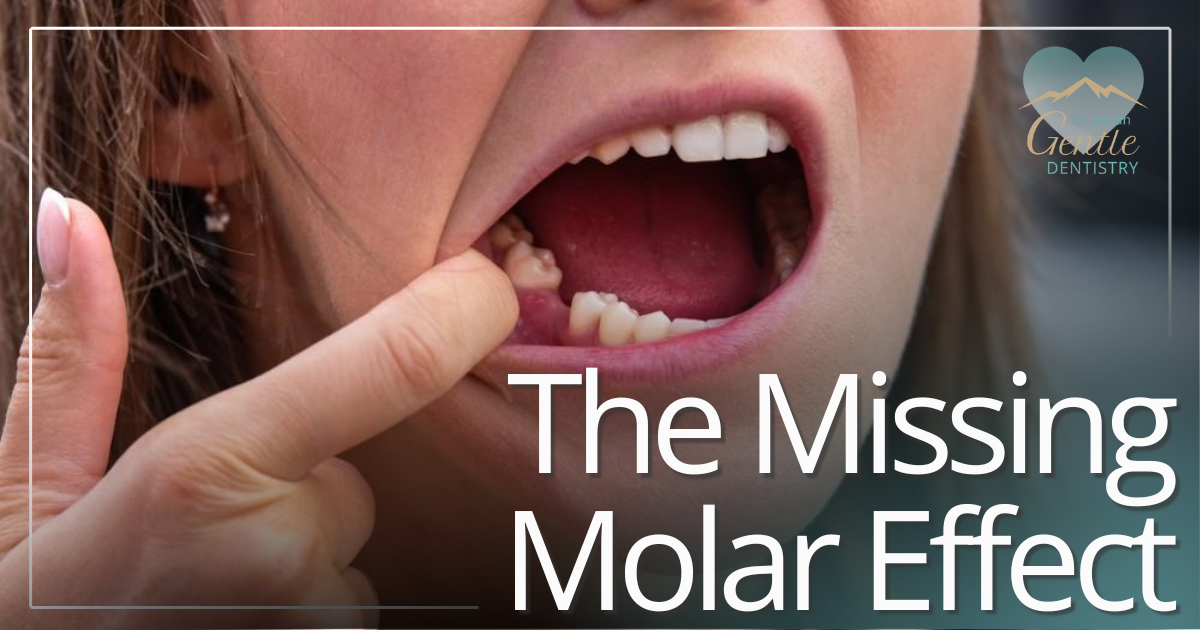
Why a Missing Back Tooth Deserves Your Attention
When people think about replacing a missing tooth, they almost always picture the front of their smile, and that’s understandable. Front teeth are visible, and their absence is immediately noticeable. But some of the most consequential tooth loss happens at the back of the mouth, quietly, where nobody can see it. That invisibility is exactly what makes it easy to ignore. And ignoring it tends to come at a cost.
Back Teeth Are Important Too
Back teeth, including molars and premolars, are essential for maintaining your overall oral health because they support proper chewing, bite stability, and jaw structure. Recognizing their importance helps you understand why losing them can have far-reaching effects.
Molars and premolars are the workhorses of your mouth. They grind and break down food, distribute chewing pressure evenly, and provide structural support that keeps your bite balanced. Losing one doesn’t just leave a gap; it removes a load-bearing part of a system that depends on every component doing its job. Your mouth notices immediately, even if you don’t.
How Eating Changes With a Missing Back Tooth
One of the first shifts after losing a back tooth is how you chew. The load redistributes, often to one side, and you may start avoiding certain foods or textures without consciously deciding to do so. Crunchy, chewy, or tough foods start feeling like more effort than they’re worth. The teeth absorbing that extra pressure weren’t designed to carry it alone. After a while, wear, sensitivity, and strain can all develop in areas that were never meant to do this much work.
The Gap
Teeth stay in position partly because they support one another. When one is missing, the neighboring teeth can begin drifting into the space, and the opposing tooth — the one above or below the gap — can start to over-erupt because it no longer has proper contact. Left unaddressed, a missing back tooth can lead to:
- Neighboring teeth shifting into the open space
- The opposing tooth over-erupting
- Food getting trapped more easily around the gap
- Bite changes that affect comfort and function
- Increased pressure and wear on remaining teeth
What Happens to the Bone Underneath
A tooth root stimulates the jawbone beneath it. When the root is gone, the bone in that area no longer receives the stimulation it needs, and the body gradually begins to reabsorb it. This matters because preserving bone volume gives you better treatment options.
“Nobody Can See It” Isn’t a Good Excuse
It’s an easy thing to tell yourself. The gap is hidden, nothing hurts yet, and life goes on. But visibility has never been a reliable measure of importance in dentistry. Some of the most critical teeth in your mouth are the ones you don’t see when you smile. A missing back tooth can affect your comfort, bite, jawbone, and long-term oral health. When we talk about replacing a missing back tooth, we’re not just filling a space. We’re protecting everything around it: the neighboring teeth, the bone, the balance of your bite.
If you’ve been putting off replacing a tooth because it doesn’t show, we need to talk. Call to schedule your appointment at Bozeman Gentle Dentistry, located in Bozeman, MT.